

- 0
- (0 reviews)
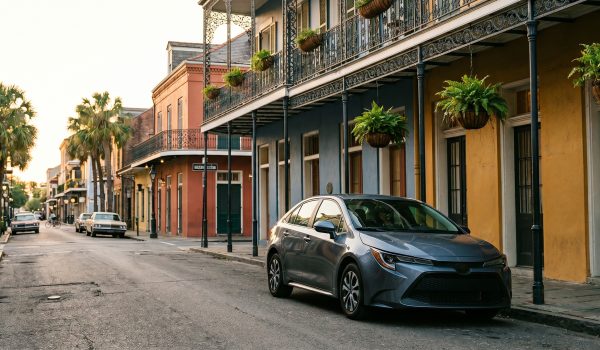

New Orleans is not a city where every traveler should rent a car immediately after landing. In fact, for many visitors, that is exactly how extra costs begin.
If your trip is centered around Bourbon Street, the French Quarter, live music, restaurants, and the walkable historic core of the city, a rental car can easily become more of a burden than a benefit. You pay for the car, then pay for parking, then drive very little because the most famous areas are already close together.
But New Orleans is also a city that works beautifully as a base. If you want to explore plantations, swamps, Lake Pontchartrain, nearby towns, or Gulf Coast routes, a rental car becomes much more valuable.
That is why the smartest question is not simply “How cheap can I rent a car?”
The smarter question is: “Do I need a car for Bourbon Street – or only for the part of the trip that starts after Bourbon Street?”
This guide will help you decide.
If you stay near Bourbon Street, do you really need a car?
For a lot of travelers, the honest answer is no – not for the whole stay.
If you are staying in or near:
Bourbon Street;
the French Quarter;
Canal Street;
the Warehouse District;
the Central Business District;
the riverfront areas close to main attractions;
you can often enjoy a large part of your trip without renting a car right away.
The reason is simple. The most famous tourist areas in New Orleans are compact enough for walking, short rides, or local transport. Once you add hotel parking, garage fees, and the inconvenience of navigating a busy tourist district, the car may spend most of its time sitting still while you keep paying for it.
For many visitors, the better strategy is this:
arrive in New Orleans;
spend the first days exploring Bourbon Street and the French Quarter without a car;
rent a vehicle later only when you are ready to leave the central area.
That approach often saves money.
When a rental car in New Orleans is actually worth it
A rental car becomes much more useful when your trip includes places outside the historic center.
You should seriously consider a car if you want to visit:
swamp tour areas outside the city;
plantation routes;
suburban hotels;
Metairie or Kenner;
Lake Pontchartrain areas;
Gulf Coast day trips;
Baton Rouge;
small Louisiana towns;
shopping districts outside the core tourist zone;
family or business locations beyond downtown.
In these cases, a rental car gives you much more flexibility than relying on rideshare or tours.
So the practical rule is simple:
Bourbon Street only? Maybe no car.
Bourbon Street plus regional exploring? A rental car makes sense.
How much does it cost to rent a car in New Orleans?
Rental prices in New Orleans depend on season, events, pickup location, vehicle type, and how early you book. Prices can rise sharply during Mardi Gras, festivals, football weekends, conventions, and holiday travel.
As a practical estimate, you can usually expect something like this:
| Car type | Estimated price per day |
|---|---|
| Economy car | $35-$55 |
| Compact car | $40-$60 |
| Midsize sedan | $45-$75 |
| Standard SUV | $60-$100 |
| Minivan | $85-$145 |
| Premium car | $95-$180+ |
| Luxury car | $130-$260+ |
These are not fixed prices, only useful averages. On busy dates, especially around major events, the cost can rise much higher. Booking early is especially important in New Orleans.
Should you rent at the airport or later in the city?
Most air travelers arrive through Louis Armstrong New Orleans International Airport. Picking up a car there is convenient, especially if you are heading directly to a hotel outside central New Orleans or leaving the city right away.
Airport pickup is a good choice if:
you are staying outside downtown;
you are traveling with family or luggage;
you plan to leave New Orleans quickly for another destination;
you are using the city only as a stop on a wider road trip.
But airport convenience is not always the cheapest or smartest option.
If your first days are all about Bourbon Street, the French Quarter, and nearby neighborhoods, you may be paying for a vehicle you do not truly need yet. In that case, it is often better to reach your hotel first, enjoy the central part of the trip, and rent a car later from a city location.
That is one of the easiest ways to reduce total trip cost.
The biggest hidden cost in New Orleans: parking
In many cities, travelers focus too much on the rental rate and not enough on parking. In New Orleans, that can be a mistake.
Parking around tourist-heavy areas, especially near Bourbon Street and the French Quarter, can be expensive. Many hotels charge extra for overnight parking, and parking garages add another daily cost to the trip.
So before booking a car, ask your hotel:
Is parking included?
How much is overnight parking?
Is it self-parking or valet?
Are there in-and-out privileges?
Will I be paying every day even if I barely use the car?
This matters because a car that seems affordable at first can quickly stop looking cheap once parking is added.
If the vehicle will mostly sit in a garage while you walk around the Quarter, the rental may not be worth it for those days.
What type of rental car works best in New Orleans?
The best car in New Orleans is usually not the biggest one. It is the one that matches how you actually travel.
For city use and short regional trips, a compact or midsize car is often the smartest choice. It is easier to park, usually cheaper, and more practical for urban driving.
An economy car can work if your main goal is saving money and you travel light.
A midsize sedan is often the best balance between comfort and cost.
An SUV makes sense if you are traveling with family, luggage, or planning longer drives outside the city.
A minivan is best for larger groups.
A luxury car is unnecessary for most trips unless comfort or image is part of the experience.
In New Orleans, practicality usually matters more than style.
Driving in New Orleans: what visitors should know
Driving in New Orleans is not impossible, but it is different from driving in a newer, more spacious city. Some streets are older, tighter, busier, and less comfortable for people unfamiliar with the area.
Things to keep in mind:
traffic can be heavier near central tourist zones;
one-way streets can be confusing in some parts of the city;
street conditions are not always perfect;
pedestrian-heavy areas require extra attention;
parking rules must be read carefully.
If you are planning to stay mostly in the historic center, driving every day may feel less convenient than you expected. But once you leave the dense tourist core, having a car becomes much more practical.
Fuel policy: keep it simple
The easiest fuel option is almost always full to full. You receive the car with a full tank and return it full.
This is usually the clearest and most economical policy. Prepaid fuel may sound convenient, but many travelers end up paying for more fuel than they actually use.
If you return the car near the airport, fill up beforehand and keep your receipt until the rental is fully closed.
Insurance and deposit: do not decide when tired
One of the most expensive moments in car rental is the counter conversation after a flight, when you are tired and someone offers you several insurance upgrades.
Before the trip, check whether your credit card or personal auto insurance already provides rental coverage. If yes, understand what is covered and what is not.
At the counter, ask clearly:
What is included?
What is optional?
What happens if I decline extra coverage?
How much is the deposit hold?
Never buy everything automatically just because the process feels rushed.
Hidden fees that can increase your cost
The daily rate is only part of the final bill. In New Orleans, like anywhere else, the full price may include:
airport surcharges;
insurance add-ons;
extra driver fees;
young driver fees;
fuel charges;
late return fees;
GPS charges;
child seat fees;
deposit holds;
hotel parking costs;
toll-related charges if you travel outside the immediate area.
This is why a slightly higher daily rate with better conditions may be a better value than the cheapest listing on the page.
Is an SUV necessary in New Orleans?
Usually, no – not automatically.
Some travelers always choose an SUV without thinking about whether they truly need one. In New Orleans, a smaller car is often more practical if you are spending time in the city.
An SUV makes sense if:
you travel with several people;
you have lots of luggage;
you want more comfort for longer drives;
your route is mostly outside the city;
you are combining New Orleans with a bigger regional road trip.
If you are mostly staying around the city center, a compact or midsize car is usually the better choice.
Best trips from New Orleans by rental car
This is where renting a car starts to make much more sense.
A car allows you to explore beyond the nightlife and music scene.
Popular driving ideas include:
Plantation country – a classic Louisiana day trip.
Swamp tour areas – easier to reach when you are not tied to a tour bus schedule.
Lake Pontchartrain region – good for a short scenic drive.
Baton Rouge – practical as a longer day trip or overnight stop.
Gulf Coast areas – a good option if your trip extends beyond New Orleans.
Small Louisiana towns – ideal if you want to see a different side of the state.
For travelers who want only Bourbon Street, a car may feel unnecessary. For travelers who want Bourbon Street and beyond, a rental car can completely improve the trip.
How to save money on New Orleans car rental
Do not rent the car for days when you stay only near Bourbon Street.
Compare airport pickup with city pickup.
Book early for festivals, holidays, and Mardi Gras season.
Choose a compact or midsize car unless you really need more space.
Check hotel parking before confirming the reservation.
Avoid prepaid fuel unless it clearly benefits your route.
Use your phone for navigation instead of paying extra for GPS.
Look at the total price, not only the starting daily rate.
Check cancellation terms and compare again later if your booking is flexible.
The single best money-saving tip in New Orleans is simple:
rent the car for the road-trip part of the trip, not automatically for the Bourbon Street part.
New Orleans is one of the clearest examples of a city where timing matters more than simply having a rental car.
If your trip is mostly about Bourbon Street, the French Quarter, music, food, and walkable attractions, you may be better off without a car at first.
If your trip includes swamps, plantations, nearby towns, coastal routes, or a wider Louisiana journey, then a rental car becomes a smart move.
So before you book, ask yourself:
Will I really use the car while staying near Bourbon Street?
How much will parking add to the cost?
Would it be smarter to rent later instead of immediately at the airport?
Once you think about the trip this way, choosing the right New Orleans car rental becomes much easier.
- 0/5
- (0 reviews)


Michael Carter