

- 0
- (0 reviews)
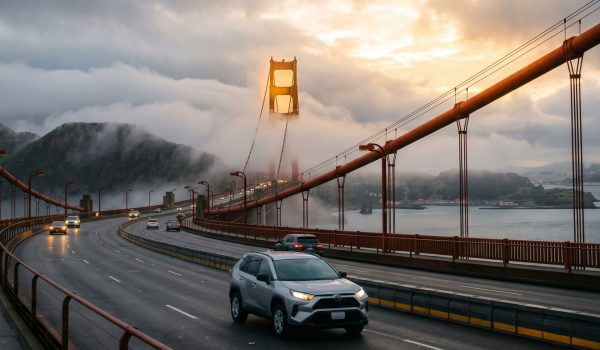

What Nobody Tells You – Prices, Hills, Tolls & the Best Drives from the Bay Area
San Francisco is the kind of city that makes you rethink everything you thought you knew about driving. It is roughly 7 by 7 miles – smaller than you expect – yet it manages to pack in hills that drop your stomach, one-way streets that go nowhere logical, and a parking situation that locals describe with language you would not use around children. And still, a rental car here is absolutely worth it. Not for the city itself – Muni, BART, and your own feet handle that fine – but for everything around it. Napa is 45 minutes north. Muir Woods is 30. Big Sur starts four hours south and does not stop being beautiful until you run out of California. The car is not the point. Everything you drive to is.
The Honest Price Breakdown
Economy cars start from around $28-$32 per day, which sounds reasonable until you add airport fees, insurance, and the fact that you will definitely pay for parking every single night.
A realistic daily budget, all-in: $60-$90 for a compact or standard car after fees, insurance, and taxes. Airport pickups at SFO include facility charges and concession recovery fees that can push the total meaningfully higher than downtown branch rates – worth comparing both before you commit.
| Class | Example | Price / Day | Best For |
| Economy | Toyota Corolla | $28-$45 | Solo, city trips |
| Standard | Honda Accord | $50-$75 | Couples, wine country |
| Compact SUV | Toyota RAV4 | $60-$90 | Parks, Tahoe |
| Full-Size SUV | Ford Explorer | $80-$140 | Groups, Yosemite |
| CHEAPEST OPTION: San Jose Airport (SJC), about an hour south of downtown SF, often has lower rates than SFO and has a rental car center reachable on foot from baggage claim. If you are flexible on arrival, always compare both airports. Midweek pickup (Mon-Wed) also consistently beats weekend rates. |
The Hills. Let’s Talk About the Hills.
This is the part of San Francisco driving that everyone underestimates until they are sitting at a red light on a 30-degree incline, watching the car in front of them roll backwards three feet before catching. The two most challenging aspects of driving in SF are the steep hills and parking – nothing else comes close.
Practical hill tips:
- Always request an automatic transmission. Balancing clutch and handbrake on a 25% grade in traffic is not a vacation skill – decline a manual if offered.
- On steep descents, shift to low gear or low mode. Let the engine brake for you. Do not ride the foot brake on long downhills – it overheats.
- Facing uphill when parked: turn front wheels away from the curb. Facing downhill: turn them toward the curb. This is required by law – parking enforcement will ticket you if wheels are not curbed.
- Always use the handbrake, every time, regardless of how gentle the slope looks.
- Rent a compact or subcompact. Large SUVs and vans are genuinely difficult on narrow SF streets and even harder to park on a hill.
- At uphill intersections with stop signs, leave extra space from the car ahead – they may roll back slightly before moving forward.
Parking: The Real Cost of Driving in SF
Here is the thing about parking in San Francisco: finding a spot and actually parking there are two completely separate problems.
Street parking in residential areas is strictly limited – usually two hours maximum. If no signs are visible, the limit is 72 hours, after which your car will be towed. Every street has cleaning schedules. Miss one day and you will return to find the car gone. Parking enforcement in SF is not a rumor – it is a well-funded operation.
One local spent an hour circling Nob Hill without finding a spot and gave up and went out to dinner instead. That is not an exaggeration. That is a Tuesday evening.
What actually works:
- Use parking garages near tourist areas – Embarcadero, Fisherman’s Wharf, Union Square, the Mission. Budget $25-$40 per day in central areas.
- Check hotel parking fees before booking – most SF hotels charge separately and it can add $30-$50 per night to your costs.
- For overnight stays outside the city center, residential street parking is more available but still requires reading every sign carefully.
- SpotHero and ParkWhiz apps show real-time garage availability and prices across the city – useful for planning ahead.
Bridge Tolls – They Catch Everyone
There are 7 toll bridges around San Francisco: the Golden Gate, Oakland Bay, Dumbarton, San Mateo-Hayward, Benicia-Martinez, Richmond-San Rafael, and Carquinez bridges. All California tolls are electronic – no cash booths exist anywhere in the state.
The Golden Gate Bridge:
The toll applies heading southbound into the city – $8 to $10 for standard vehicles. Heading north out of the city is free. If you drive through without a transponder, the invoice goes to the rental company, which passes it to you with an administrative fee added on top.
The Bay Bridge (I-80):
Toll applies westbound heading into San Francisco. Heading east out of the city is free. Expect $6-$7 at standard times.
What to do:
- Ask your rental company about their toll program at pickup – understand whether it charges per day or per toll event. A per-day model is expensive for occasional use.
- Alternatively, register your rental plate at the bridge’s website and pay online within five days of crossing. This avoids the rental company’s admin fee entirely.
- Declining the rental company’s toll package is almost always your right. Do not let counter staff pressure you otherwise.
- For most inner-city routes – Golden Gate Park, Castro, Mission, Haight, Chinatown – you will never touch a toll road at all.
Do You Actually Need a Car in San Francisco?
Honest answer: for the city itself, probably not. BART connects SFO to downtown in 30 minutes for $10. Muni Metro, buses, and cable cars cover most neighborhoods. Rideshare is abundant and cheaper than daily parking.
The smart move: pick up the car on the day you are leaving the city for a trip, and return it when you come back. You pay for driving, not for parking in a $45/night hotel garage.
Rent a car if your trip includes:
- Napa or Sonoma wine country
- Muir Woods or Point Reyes
- Yosemite, Lake Tahoe, or Monterey
- The Pacific Coast Highway to Los Angeles
- Any national park, coastal town, or mountain destination
The Drives That Make the Car Worth It
| Destination | Drive | Car Tip | Note |
| Napa & Sonoma | 45-90 min | Any car | Book winery in advance |
| Muir Woods | 30-40 min | Any car | Reserve parking online |
| Monterey & Carmel | 2 hrs | Any car | Visit aquarium |
| Yosemite NP | 3.5-4 hrs | SUV recommended | Timed entry required |
| Lake Tahoe | 3.5 hrs | Any car | 2 days ideal |
| Big Sur LA | 5-8 hrs | Any car | Fill up before Big Sur |
Napa & Sonoma Wine Country – 45-90 minutes
Head north over the Golden Gate and follow Route 29 into the Napa Valley. The vineyards start before you expect and the road is genuinely beautiful. Sonoma is less formal than Napa, more local in feel, and the drive back along the coast via Highway 1 through Marin is one of the better ways to end an afternoon. Book any winery visit in advance – most now require reservations.
Muir Woods & Mount Tamalpais – 30-40 minutes
Cross the Golden Gate, turn left into Marin, and within half an hour you are walking among 1,000-year-old coast redwoods. Lincoln Boulevard through the Presidio offers excellent Golden Gate views on the way out. Book the Muir Woods parking reservation before you go – the lot fills completely by 9 AM on weekends, and no reservation means no entry.
Monterey & Carmel – 2 hours
South on Highway 1 through Half Moon Bay and Santa Cruz. Monterey has one of the best aquariums in the country. Carmel-by-the-Sea is a small, eccentric town where Clint Eastwood was once the mayor and every cottage looks like it was painted by someone with excellent taste and too much time on their hands.
Yosemite National Park – 3.5-4 hours
East on I-580, then south through the San Joaquin Valley. Go in spring for the waterfalls. In summer, the valley requires a timed entry reservation – book it before you leave SF. In winter, tire chains may be required on mountain roads. An SUV adds comfort for the longer drive but is not required.
Lake Tahoe – 3.5 hours
East on I-80 into the Sierra Nevada. Tahoe is one of the most beautiful lakes in North America – 1,600 feet deep, improbably blue, surrounded by mountains. In winter it is a ski destination. In summer, swimming, hiking, and kayaking. Best as a two-day trip to get the most out of the drive.
Big Sur & Los Angeles – 5-8 hours
The full Pacific Coast Highway route south is one of the great American drives. Highway 1 through Big Sur is narrow, winding, sometimes closed after heavy rain, and consistently extraordinary. Stop at Bixby Creek Bridge, McWay Falls, and Julia Pfeiffer Burns State Park. Fill up in Carmel before entering Big Sur – there are almost no gas stations between Carmel and Morro Bay. A one-way rental from SF to LA is often available and avoids doubling back.
Things Specific to SF That Trip People Up
One-way streets and transit lanes
Downtown SF has many one-way streets – pay attention to No Entry and No Turn signs. Some sections of road are designated Transit-Only lanes and driving in them earns an automatic ticket, even in light traffic. Cable car tracks run through some streets – do not park across them and be cautious when crossing.
Pedestrians and cyclists
Pedestrians always have right of way in SF, even at unmarked crosswalks. The city has a large and assertive cycling population. Cyclists do not always follow traffic rules. Give both more space than you think is necessary.
Rush hour and the Bay Bridge
Rush hour runs 7-9 AM and 4-7 PM. The Bay Bridge heading west into the city is the worst bottleneck – on a bad evening it can add 45 minutes to a 10-minute crossing. Plan drives out of the city before 7 AM or after 7 PM if possible.
Fog and wet roads
San Francisco’s famous morning fog can reduce visibility significantly on the Golden Gate Bridge and in the Sunset and Richmond districts. It usually burns off by midday but returns fast once the sun drops. Streets become slick on steep hills after rain – leave extra stopping distance and be especially careful on downhills.
Car break-ins
Do not leave anything visible in your car, anywhere in the city. Car break-ins are a known and persistent problem in SF, particularly near Fisherman’s Wharf, Coit Tower, and anywhere near tourist parking. Empty the car every time you park. Not a bag, not a cable, not a jacket – nothing visible through the windows.
- 0/5
- (0 reviews)


Michael Carter